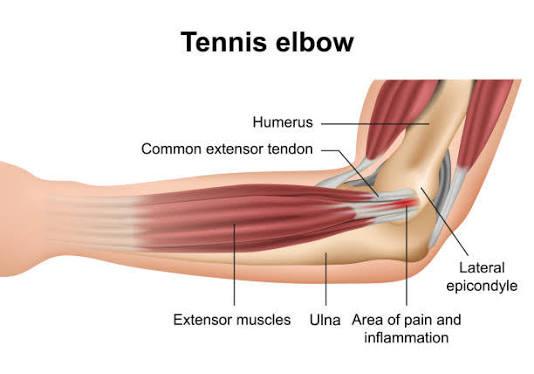
Recurrent pain on the outside of the upper forearm, right below the elbow's bend, is the most typical sign of tennis elbow. Additionally, pain may be felt all the way down the arm to the wrist. When someone lifts or bends their arm, they may experience pain. Additionally, it is felt when doing simple tasks like writing or holding little things. Twisting the forearm might result in tennis elbow. When you fully extend your forearm or turn a door handle, you may see this. Visit our clinic now and consult with Dr. Prashant Kamble, who is the Best Doctor For Tennis Elbow in South Mumbai.
The origins of this condition are related to the constant performance of improper movements of the arm. The illness can be manifested with minor tears of the tendon attachment in the elbow. When talking about tennis, the same definition applies in the sense that it refers to making any repetitive actions with the game ball and a racket. This creates a movement on the wrist instead of the elbow joint or shoulder. Tennis elbow is related to extension of the fingers and wrist - the type of movement that allows the person to "snap" or flick the wrist, as in a racquet swing. This exerts a load on the tendon, which may lead to irritation and inflammation. This breakdown of the tendon most commonly results in pain in the extensor muscles, those that straighten the wrist. We have the Best Doctor For Tennis Elbow in South Mumbai.
A person can determine whether they have tennis elbow at home with a simple test. Put your hands on top of the chair back while standing behind it, with your elbows straight and your palms facing down. Make an effort to raise the chair. This motion is probably a sign of tennis elbow if it hurts the outside of the elbow. Sometimes an MRI or X-ray is required to rule out more serious problems, including arthritis or an injury to the elbow joint. Imaging is rarely required, though. The physician assesses movements of the arm and then asks the patient to explain where and what type of pain is felt. Most of the time, this is adequate to establish the diagnosis. MRI allows for a clearer view of the tissues in the arm than an X-ray. Generally, this is necessary if, after a year of non-operative treatments, the external elbow pain is still persistent. Electromyography (EMG) can be performed to check for any nerve compression. Thus, contact us right away, as we have the Best Tennis Elbow Doctor in South Mumbai.
Different therapy techniques can be used at home or after visiting a doctor.